The job AI still can’t do

The need for the primary functions of middle managers is as strong as ever. But while middle management isn’t disappearing, it is being reinvented

U.S. job postings for middle management roles were about 42% lower in late 2025 than they were in April 2022, when middle manager job postings peaked, according to Revelio Labs data. Instead of eliminating the middle man, is Corporate America eliminating the middle manager? 

No. Middle management isn’t disappearing. But it does seem like it’s being reinvented.

Companies are flattening their org charts in many cases to cut costs and accelerate decision-making. Take a little economic pressure from here, some AI automation for administrative tasks from over there, add a pinch of salt, and bam — fewer management openings.

Yet while the number of jobs may be shrinking, the need for the primary functions of middle managers is as strong as ever. They’re the conduit, in both directions, between upper management and the teams doing the day-to-day work of the business.

“The primary role of a ‘middle manager’ has often been viewed as translating expectations, perspectives, and priorities between senior leadership and those closest to the work,” said Jenn Christison, a principal consultant at Seven Ways Consulting. “For example, senior leadership sets an edict. It is the middle manager’s job to understand the implications for their teams and translate high-level direction into actionable next steps. And when their teams push back or offer suggestions, it is the middle manager who must find a way to translate their practical considerations into ‘strategic imperatives’ that will resonate with the C-suite.”

Less attention is given to the equally important task of ensuring effective collaboration across functional silos, Christison said.

“Middle managers are in the unique position of hearing perspectives from all angles of their organization: the top, bottom, and sides. Their bosses give them direction, their direct reports give them the lay of the land, and their peers give them insights into the gaps between,” she said. “As organizations grow ever flatter — unfortunately most often due to urgent cost cutting rather than thoughtful design — middle managers can emphasize their unique value by creating deliberate communication forums with their peers, sharing concerns, insights, and ideally, process improvements. In building effective collaboration across functional silos, middle managers will reduce significant friction and demonstrate commitment to the organization’s objectives.”

All that is to say, the middle-management era is far from over.

“You still need middle managers. The idea that you can remove them all and it’ll be fine is nonsense,” said Ben Hardy, a professor of organizational behavior at London Business School. “You need people to coordinate between parts of the organization, and employees like to report to a person. AI has, in some cases, been a disappointment. The promise is good, as it was with offshoring call centers, but things that look like simple tasks often aren’t.”

‘Communicate, communicate, communicate’

What does reducing friction look like?

“The first skill a manager needs to develop is the ability to recognize where friction exists and why it may be happening in the organization,” said Jermaine Moore, a leadership consultant with the Mars Hill Group. “Is it an overall lack of clarity on strategy and direction? Is there confusion around team roles and responsibilities? Are their people feeling overwhelmed as they are asked to do more with less? Are there interpersonal ‘rubs’ within the team that have not been addressed?”

Most of the friction within organizations is due to a lack of communication, Moore said.

“There is an adage: Communicate, communicate, communicate, and when you think you have communicated enough, communicate some more,” he said. “People rarely complain that they are receiving too much communication.”

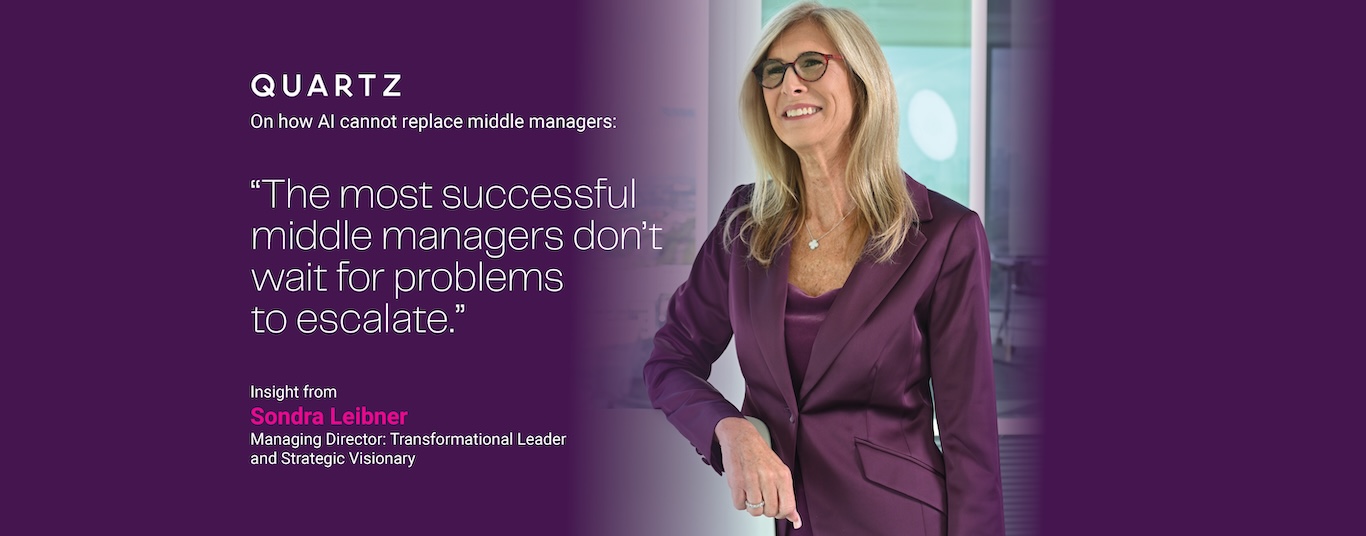
Additionally, the most successful middle managers don’t wait for problems to escalate, said Sondra Leibner, managing director of consulting at alliantConsulting.

“[Successful middle managers] develop early warning systems through regular check-ins and pattern recognition that catches issues before they become issues,” Leibner said. “Creating communication rhythms that employees listen to and/or read to prevent the information gaps that cause most organizational friction. They become adept at establishing clear decision rights and escalation paths, knowing exactly which decisions they can make independently versus which require consultation, and they advocate upward to eliminate bureaucratic bottlenecks.”

Furthermore, indispensable middle managers position themselves as guardians of institutional knowledge. They understand how work is supposed to get done, and how it actually gets done, Leibner said.

They:

  • Proactively build their team’s adaptability muscles through skill development and careful explanation and question answering when changes are announced.
  • Master upward influence by presenting problems with solutions, data, and context, becoming leaders who bring clarity to complexity rather than adding to it.
  • Serve as cultural carriers who maintain team cohesion and values during uncertain times.
  • Raise the bar for teams by giving feedback rooted in growth and development for each individual team member, creating a culture of collaboration and accountability.


“At their best, middle managers are the critical connective tissue between strategy and results, and that role has never mattered more,” said Sabra Sciolaro, the chief people officer at Firstup, a workplace communications platform. “They sit where strategy either becomes real or quietly stalls, turning high-level direction into concrete priorities, decisions, and outcomes teams can actually execute against. They reduce friction by clarifying next steps, simplifying processes, and protecting focus so teams aren’t constantly pulled in competing directions.”

Middle management isn’t disappearing, Sciolaro said, it’s being redefined.

“That’s why these roles are shrinking in number but growing in impact,” she said. “And the managers who adapt won’t just keep their jobs. They’ll become some of the most critical leaders in the company.”
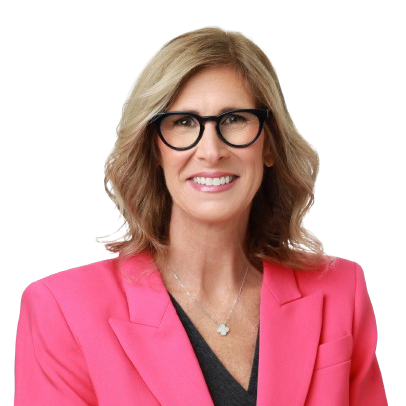
Sondra Leibner is a Managing Director with alliantConsulting. She is a transformational leader and strategic visionary – an executive-level consultant who fundamentally transforms leaders’ approach to strategy development, leadership alignment, change management, culture design, and talent development. When you meet Sondra, you will feel the depth of her experience and her understanding that your challenges, culture and circumstances are unique. She will bring flexible, creative and pragmatic approaches to create truly customized and workable solutions. Sondra’s ability to communicate complex messages in simple and memorable ways enhances her ability to achieve unprecedented levels of engagement and adoption. When you begin working together you will be excited about your next meeting.

Amy Flynn

Managing Director

Amy is the Life Sciences Industry Lead and a Managing Director of alliantConsulting. She has driven global change initiatives for life science companies across Clinical Development, Regulatory Affairs, Quality, Supply Chain, and Medical Affairs and has supported clients with all aspects of Integration and Separation planning and execution.

She is energized by helping companies deliver on their most important strategies and passionate about developing the business acumen and capabilities of her client’s teams. Specializing in large scale transformation, Amy combines a strategic mindset with hands on execution and attention to detail to help clients realize and sustain the intended value of their efforts.

History of Proven Success

Amy has driven transformational change initiatives for life science companies across Clinical Development, Regulatory Affairs, Quality, Supply Chain, and Medical Affairs and has supported clients with all aspects of Integration and Separation planning and execution. She is energized by helping companies deliver on their most important strategies while expanding the experience and capabilities of her client’s teams.

Amy has directed major transformation projects for:

Chris Unruh

Managing Director of ERP and Business Applications

Chris Unruh brings over 25 years of experience in technology transformation and consulting to his role as Managing Director of ERP and Business Applications at alliant. His extensive background in leadership development, talent management, and business strategy enables him to drive results-oriented solutions. Chris’s expertise spans operational transformation, practice development, market-making, and technology program management. With leadership roles at Grant Thornton and MarketSphere Consulting, as well as experience as an independent executive advisor, Chris employs a business-first approach. By leveraging technology as a key enabler, he consistently delivers tangible results for clients across various industries.

History of Proven Success

A serial entrepreneur, Chris founded a successful management consulting practice that was later acquired by Grant Thornton. As the Managing Principal of Product Automation at Grant Thornton, Chris helped develop over 200 internal and client-facing automation products and was recognized for his ability to lead integrations, acquisitions, and technological implementations.

Chris has directed major transformation projects for:

Chris Stephenson

alliantDigital Managing Director: Intelligent Automation and Al

Chris Stephenson is the Managing Director of Intelligent Automation, Al & Digital Services at alliantDigital. Chris has a 25 year history in tech consulting and developing emerging technology solutions for nearly every sector. As a leader in the Al space, Chris has already delivered on multiple internal and client-facing Al products.

History of Proven Success

A serial entrepreneur, Chris founded a successful management consulting practice that was later acquired by Grant Thornton. As the Managing Principal of Product Automation at Grant Thornton, Chris helped develop over 200 internal and client-facing automation products and was recognized for his ability to lead integrations, acquisitions, and technological implementations.

Chris has directed major transformation projects for:

Sondra Leibner

alliantConsulting Managing Director: Transformational Leader and Strategic Visionary

Sondra is an executive level consultant who doesn’t just support leaders but revolutionizes their strategy development, leadership alignment, change management, culture design, and talent development. When you meet Sondra, you will feel the depth of her experience and her understanding that your challenges, culture and circumstances are unique. She will bring flexible, creative and pragmatic approaches to create truly customized and workable solutions. Sondra’s ability to communicate complex messages in simple and memorable ways enhances her ability to achieve unprecedented levels of engagement and adoption. When you begin working together you will be excited about your next meeting.

History of Proven Success

Sondra offers comprehensive services to help business leaders maximize stakeholder value and drive organizational success. She works with teams to craft visions, align leadership, manage changes, and build effective cultures that foster growth and innovation. By focusing on key areas such as communication, collaboration, clarity, and accountability, Sondra helps organizations improve profitability, increase engagement, and realize long-term value.

Leadership Alignment

Leadership teams that are aligned are able to drive business success more effectively. Communication, collaboration, clarity and accountability are the foundations for successful leadership teams. Sondra works to align teams behind your desired destination with the objective of increased engagement, buy in, visible support and clarity of goals to drive success and value realization.

Change Management

It is possible to engage large groups of people and motivate them to do things differently and decrease disruption when thoughtful change management practices are deployed. Change Management requires clarity of purpose, leadership alignment, sponsor leadership, engagement, simple and targeted messaging, crisis and risk management and many others. Sondra will work to develop and execute a scalable approach to manage the people side of change through assessing impacts, readiness and educational needs of stakeholders.

Culture Design

The success or failure of an organization is driven by leadership and culture. Actively taking steps toward building your culture means focusing on the alignment of your leadership, values and behaviors. Sondra will assess current state behaviors, beliefs, norms and structures of your organization to identify similarities and differences inherent in the culture and subcultures and together we will create a roadmap to increase engagement to realize the intended culture.

Talent Development

Customized talent strategies that resonate with your vision, values, and culture are Sondra’s forte, empowering your team to excel and drive the company’s strategic objectives.

Sondra has directed major transformation projects for:

Joy Taylor

alliantConsulting Managing Director:
A Visionary Leader and Proven Change Management Expert

Joy Taylor isn’t just a consultant; she’s a force of nature in the world of business transformation. With over twenty-five years of cross-functional experience, Joy applied her expertise in program transformations, project leadership, strategy and execution, team facilitation, change management, communication, and Lean Sigma to everything from startups to multibillion-dollar enterprises. Her impressive track record speaks volumes, but her accolades and career milestones set her apart as a critical advisor for CEOs.

Award-Winning Leadership and Proven Success

As National Managing Principal at Grant Thornton, Joy demonstrated her unparalleled ability to steer complex, global programs and initiatives. Her tenure as CEO of a $60 million business underscores her credibility and reliability as a peer for other CEOs seeking strategic guidance and impactful change management.

Joy’s career is also studded with achievements including:

Brava! Award,

EY Entrepreneurial Winning Women Class of 2013 member, and a

2022 Life Sciences Voice Top Industry Leader Award.

Award-Winning Leadership and Proven Success

Joy's career is studded with achievements including a Brava! Award, EY Entrepreneurial Winning Women Class of 2013 member, and a 2022 Life Sciences Voice Top Industry Leader Award. As National Managing Principal at Grant Thornton, she demonstrated her unparalleled ability to steer complex, global programs and initiatives. Her tenure as CEO of a $60 million business underscores her credibility and reliability as a peer for other CEOs seeking strategic guidance and impactful change management.

Master of Complex Transformations

Joy's unique talent lies in her ability to manage intricate, large-scale programs that span continents and cultures. She has a proven ability to manage complex, global programs and initiatives, drive process and productivity improvement efforts and lead change in a fast-paced environment.

A Visionary with Tactical Precision

Joy is not just a big thinker; she's a visionary who can translate high-level strategies into actionable goals that people are eager to achieve. Her ability to collaborate with leaders to shape vision and strategy is matched by her meticulous attention to the necessary steps and tactics required to bring those visions to life. She aligns people, process and technology to deliver results that are truly exceptional.

Joy has directed major transformation projects for: